
Tag Archives: Fiction

Review: The Goldfinch


The Goldfinch
The Goldfinch
By Donna Tartt
(Little, Brown and Company, Hardcover, 9780316055437,  October 2013, 784pp.)

The Short of It:

Memory, in and of itself, has the ability to restore and destroy.

The Rest of It:

While visiting a New York art museum, Theodore Decker, thirteen, is separated from his mother in an explosion that leaves him dazed and confused. In the immediate moments after the blast, Theo sees, and takes, a valuable painting for safekeeping. Not fully understanding what has happened or why, he stumbles out of the rubble but his life is forever frozen in time. When he realizes he has lost his dear mother, he finds himself floating through life, encountering many obstacles along the way and revisiting those final moments in the museum over and over again.

This is one hell of a book.

It’s long and I know some readers who won’t even touch it because of its length but they are really doing themselves a disservice because it is really a fine piece of work. I had planned to read it “someday” but when it was chosen for book club, I was pushed encouraged to read it a little bit sooner than I had planned and then it was awarded the Pulitzer which piqued my interest even more.

The Goldfinch  is an adventure. It meanders, there is action but not that much of it and it’s repetitive when it comes to behaviors like the excessive drinking and drug use that riddle its pages. But even with all of this going on, it’s incredibly heartbreaking and yes, beautiful. At first glance, Theo seems to be handling his loss quite well, but with each page, his pain and devastation become more real, more tangible and he becomes more reliant on the actions of others to save him. Not to mention the painting and the significance behind him taking it in the first place. Its purpose, so it seems, is to remind him of that fateful day but as it certainly does just that, it’s also a constant reminder of what he needs to do to keep it safe.

This is a book with some memorable characters too. Boris, the Ukrainian kid Theo hooks up with, is part hoodlum, part philosopher but more than anything, Theo’s best friend. Think “The Artful Dodger”. Popper, a mutt that Theo takes pity on, ends up being a loyal companion to Theo and one cannot forget Hobie, the lovable furniture maker who takes Theo in when he has nowhere else to go. These unlikely characters come together to essentially save Theo from himself, but it’s not always evident that that is what is happening. There are lots of pitfalls along the way and the journey can be tedious, but in the end, I found myself loving the story, wishing I had taken more time with the last few pages. It’s about love and trust and redemption and what’s not to like with its art world setting?

Talking about it here, I realize just how much I miss the characters. So, even though it’s long and intimidating to some, I urge you to pick it up because it’s really a book to experience first-hand.

Source: Borrowed
Disclosure: This post contains Indiebound affiliate links.
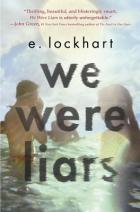
Review: We Were Liars


We Were Liars
We Were Liars
By E. Lockhart
(Delacorte Press, Hardcover, 9780385741262, May 2014,  240pp.)

*No Spoilers*

The Short of It:

Sometimes, the rich have it all. Most times, they don’t.

The Rest of It:

The Sinclairs. They seem to have it all. Money, power, looks and even a private island off of Martha’s Vineyard. Every summer they head to Beachwood to do whatever the rich do but it’s not all pretty. The adult sisters can’t help but squabble over what one seems to have over the other. The patriarch of the group, their father, seems to have his favorites, and the children, most in their teen years, are the only ones that seem to get along at all.

The story centers around the Liars, Cady (Cadence) and her cousins Johnny & Mirren and Gat, a friend of the family. For these kids, the summers are golden. Even with all of the family strife going on in the background, the summers they spend there are meaningful and wonderful, the way all summers should be at that age. But then, tragedy strikes. One day, Cady finds herself washed up on the beach. She’s sustained a head injury and can remember nothing in regards to how she got it, or what took place before the accident.

Two years pass as Cady is forced to recuperate away from the island. Two years of missing Beachwood. Two years without her cousins. When she returns. Everyone is secretive about what really happened. As bits and pieces of the events leading up to that day float back into her memory, she realizes that she’s forgotten all of it for a reason.

This book grew on me. At first, it seemed to halt along in a young adult kind of way. In that I mean, it seemed a little superficial on the surface but after spending some time with the characters, I found myself completely absorbed by the story. There are secrets of course, which makes this a page turner but the big twist that everyone talks about? Not such a big twist in my opinion. But, there is a lot going on here as far as class and social status.

The Sinclairs are THE stereotypical rich family. Gat, the family friend serves at the voice of reason. He’s a constant reminder that not everyone owns an island, that some people DO have to work to make a living. Cady falls in love with Gat, which further complicates things since her grandfather does not approve of him. So while the adult sisters drink and fight over material possessions, these teens have deep, meaningful conversations about life.

There is a bittersweet quality to the novel even before you get to the twist. That sense of lost youth as you transition into adulthood. Summers on the beach as a kid, are quite different from summers on the beach as an adult. You have a whole set of new worries and concerns and being rich doesn’t shield you from them. Lost innocence and how it’s captured here is what made the book for me.

There is a lot of hype for this book with some reviewers calling the ending “shocking” but if you go into it with an open mind, and just go with the flow, I think you will enjoy it. Bit if you go into it expecting to be shocked, you might be disappointed. Plus, there’s the mystery behind the title of the book too. The meaning of the title is not spelled out in so many words, but as the events unfold, that title means many things. One item of interest is how Cady lapses into fantastical tales to tell the story. Think fables and fairy tales. I found it to be an interesting device.

Have you read it? What did you think?

Source: Borrowed
Disclosure: This post contains Indiebound affiliate links.