
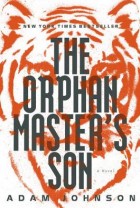
The Orphan Master’s Son
By Adam Johnson
(Random House, Hardcover, 9780812992793, January 2012, 464pp.)
The Short of It:
This is the book that derailed my writing for six weeks!! I was caught-up in the adventure of reading it, but as a story, its meandering quality prevented me from loving it, AND at the time, made it almost impossible for me to write about IT, or anything.
The Rest of It:
The title is misleading. Jun Do (John Doe) lives in an orphanage in Chongjin, North Korea. He is introduced to us as the Orphan Master’s son, so in theory, he is not an orphan and constantly reminds the reader of this. However, he is treated like an orphan and given a name from a list of martyrs so you have to assume that he is, in fact, an orphan.
When the orphanage begins to lose its battle to famine, Jun Do is enlisted into the army. There, he performs missions in tunnels operating under zero-light conditions. The fact that he spends so much time in the dark is not a coincidence. This is North Korea after all. Anyway, after this adventure he gets a job translating radio transmissions, ends up in Texas, makes friends with a senator’s wife… kidnaps people and let’s not forget when he switches identity with Commander Ga, a national hero.
This was a bizarre read. Bizarre, but utterly fascinating. I liked Jun Do. I think that is why I decided to stay with him, no matter what he was doing, or what was going on around him. I knew I liked him when he kidnapped people and somehow, I still felt sympathy for him. Is he taken advantage of? Is that why I felt sorry for him? No. I never once felt that he was ever taken advantage of, but he moves with the times. He continues to move forward no matter what is thrown at him and although he cannot be considered a hero, I did find his resiliency to be admirable.
Although there isn’t too much said about Kim Jong il, he is present throughout the novel. The translated radio broadcasts, which in reality function as a form of brain washing and a way to spread propaganda, are peppered throughout. I was constantly reminded of who was in charge and it gave a very 1984-esque tone to the novel. This, I very much enjoyed.
What I enjoyed less, was the meandering nature of the story itself. Jun Do was here, there…heck he was everywhere. There are girls on boats, there’s fishing… there are famous singers and girls getting sent to Pyongyang, ultimately, to be prostitutes. There’s even a famous actress whose shine is just beginning to wear off (think Sunset Boulevard). This was the perfect example of too much.
Even though there was a lot going on, I zipped through this book, only to sit and wonder what the heck I’d say about it. It was surreal and sometimes reminded me of Haruki Murakami’s writing, but the payoff wasn’t as good and it took me weeks to sort through my feelings. I do like a book that forces me to think, but I’m not sure the author’s goal was to completely put a halt to my everyday life. THAT is how much I thought about this book.
Now here you are, wondering if you should read it. If you are the type of reader who likes to work through a book and not have things handed to you on a silver platter, then you might enjoy this book. If you like adventure, then there is plenty of that to be found within its pages. And I have to say, I did enjoy Jun Do’s character although I never did figure him out. The book itself was a fast read and quite different from anything I’ve read before. That’s saying something, right?
Source: Sent to me by the publisher via Net Galley.
Disclosure: This post contains Indiebound affiliate links.

 Book Chatter