
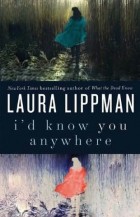
I’d Know You Anywhere
By Laura Lippman
HarperCollins
August 2010
373pp
The Short of It:
I’d Know You Anywhere forces you to constantly reassess the appropriateness of human interaction and to consider the boundaries that exist within all of us.
The Rest of It:
In the summer of ’85, fifteen-year-old Elizabeth is kidnapped by a serial killer and held hostage for several weeks. To Walter, Elizabeth is different from the other girls he’s kidnapped. So different in fact, that Elizabeth is the only one who lives to tell about her ordeal. Years later, Elizabeth (now called Eliza) is married, living in the suburbs with her husband Peter and her two children, Iso and Albie. As she lives her life, Walter sits on Death Row for the murder of another girl.
One day, Walter happens upon a photograph of Eliza(beth) in a magazine he is reading. With the help of a friend, he sends Eliza(beth) a letter saying that he’d know her anywhere. Confused over why he would want to contact her now and terrified of her children finding out about her past, Eliza(beth) sets out to explore a relationship that she’d just as soon leave in the past.
This book is part mystery and part psychological thriller and although mystery is not my thing, the psychological thriller part is. I’m fascinated by the human mind and the complexity of human relationships. The relationship between Eliza(beth) and Walter is disturbing at times. Lippman manages to create sympathy where no sympathy should exist. Walter is a serial killer, but there are times when I understood where he was coming from. As disturbing as this is for me to admit, it helped me understand Eliza(beth) and why she would even consider having a conversation with this man after what he did to her.
The mechanics of control and the lack thereof are big here. Walter can read Eliza(beth) pretty well. He also knows how to push her buttons and as much as Eliza(beth) wants to, she cannot put him completely out of her life. She has her own demons to battle and as the lone survivor, she is often misunderstood by the other victim’s parents. Mainly because she never tried to escape, and she failed to save Walter’s last victim even though she was in a position to do so.
In addition to the main characters, Lippman introduces us to Barbara, the friend on the outside who is determined to save Walter from death row. Let me tell you, Barbara is a piece of work. Well-to-do but rude as hell and full of herself. I did not like her at all and although she too, was a victim of violence, I felt nothing for her but contempt. The inclusion of such a character is interesting because it just goes to show you that there are all kinds of people out there and just knowing this puts you in a vulnerable position.
This was my first experience with Lippman’s writing and although I felt that the characters were emotionally reserved in places, I can see myself picking up another Lippman book in the future. Also, it should be noted that the violence depicted in this novel is not written with great detail. You are given just enough to know what happened, the rest is left up to your imagination.

To visit Laura Lippman’s website, click here.

To view Lippman’s other TLC tour stops, click here.
Source: A big ‘thank you’ to TLC Book Tours for asking me to be a part of this tour and to the publisher for providing me with a review copy of the book.

 Book Chatter